PoolFu vs PoolMath

PoolMath is a calculator. PoolFu is Mastery.

Both apps respect the FC/CYA relationship. Only one explains what to do with it.

9
Languages
🇺🇸 🇪🇸 🇩🇪 🇫🇷 🇮🇹 🇧🇷 🇨🇳 🇹🇼 🇯🇵
2,700+
Chemical Products
Precise dosing for every formula from 180+ brands.
1,721
Hot Tub Models
Every spec entered by hand. Yes, all of them.
0
Product Affiliates
No affiliate deals. Just unbiased advice.
Feature Comparison

What you get with each.

Chemistry Methodology

Feature
PoolFu
PoolMath
Correct FC/CYA relationship Both apps get this right. PoolMath's TFP foundation is chemically sound.
Unity Framework (no contradictions) PoolMath treats parameters independently. It can show pH as 'ideal' while simultaneously warning that water balance is off and you should raise pH.
pH/temperature HOCl adjustment Adjusts chlorine effectiveness based on pH and temperature. PoolMath uses a flat FC target for a given CYA level regardless of pH or water temperature.
Surface-aware calcium targets PoolMath tracks your surface type but uses the same calcium ranges regardless. A user review confirms this frustration: the app's recommended CA 'exceeds the recommended level for my heater' and they can't adjust it. PoolFu adjusts targets for plaster, vinyl, and fiberglass automatically.
Temperature-aware CSI/LSI Cold pools and hot spas need different balance targets. PoolMath calculates CSI but doesn't adjust guidance based on temperature context.
Borate calculation Both apps calculate borates.

User Guidance

Feature
PoolFu
PoolMath
Explains WHY, not just WHAT PoolMath shows numbers. PoolFu explains what they mean, what to expect, and what caused the problem.
Conversational AI assistant Splash teaches chemistry in plain English with your pool's context. PoolMath's guidance is the TFP forums, which are excellent but require you to post, wait, and interpret advice yourself.
Natural language troubleshooting Describe symptoms and get explanations: "pH keeps rising after I adjust it" leads to root cause analysis, not just another dose.
Pattern detection Identifies recurring issues like pH drift, CYA creep, and SWG problems after 6+ tests. PoolMath logs history but doesn't analyze it for patterns.
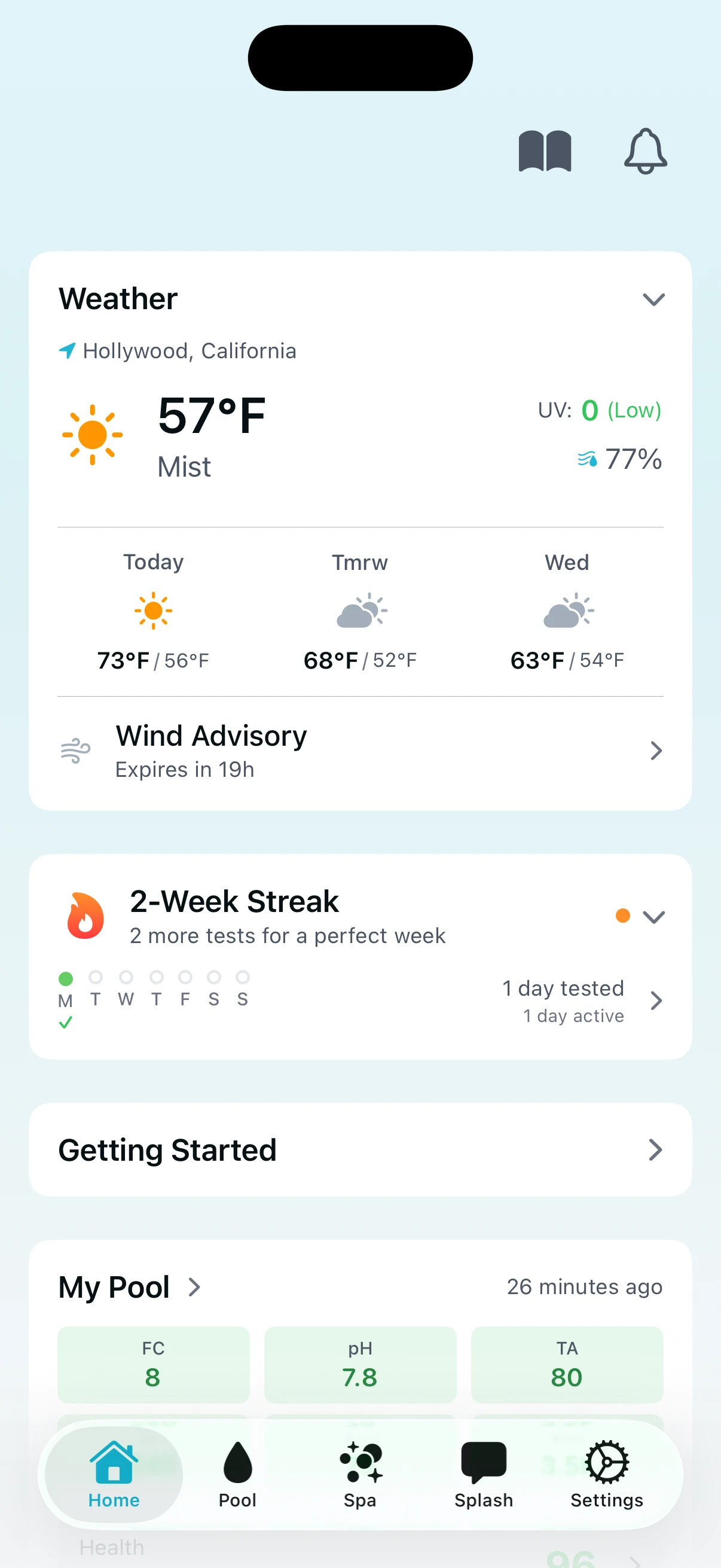
Health score At-a-glance pool health with winterization awareness and data freshness tracking.
Anomaly detection Catches contradictory or impossible readings before they affect recommendations. Weather-correlated explanations for unexpected changes.
Customizable target ranges PoolMath's target ranges are fixed to TFP methodology by design. Their FAQ confirms 'there is no way to alter the levels.' Multiple user reviews cite this as a frustration, especially when equipment manufacturer recommendations conflict with TFP ranges. PoolFu adjusts targets automatically based on equipment, surface, and conditions.
Effects of adding (simulation) Both apps let you simulate the effect of adding a chemical before committing. PoolMath's 'Effects of Adding' feature and PoolFu's dosing flow both show predicted impact on readings.

Equipment Awareness

Feature
PoolFu
PoolMath
SWG model database Both apps include SWG model databases. PoolMath auto-populates 24-hour chlorine output when you select your model (or lets you enter lbs/day manually). PoolFu's database covers 616 models with model-specific salt targets, output settings, and full spec data.
Equipment-first dosing logic PoolFu tells your SWG to work harder before telling you to add bleach. Chemical addition is a last resort. PoolMath calculates SWG percentage needed to reach a target FC but doesn't prioritize SWG adjustment over chemical addition in its recommendations.
Model-specific salt targets Your Pentair IC40 and your Hayward AquaRite have different salt requirements. PoolFu knows the difference. PoolMath uses a generic salt range.
Spa database (1,721 models) 1,721 models from 167 brands. Manufacturer-specific volume, jet configurations, and spa-specific chemistry with bromine support.
Bromine support Full bromine for pools and spas with CDC-based ranges.
MPS (non-chlorine shock) support A PoolMath user review confirms being 'forced to enter MPS as something else.' PoolFu supports MPS natively for spa maintenance.
Chemical product database (2,721 products) Exact dosing for 2,721 products across 180 brands. PoolFu knows the active ingredients and concentration of the chemicals you actually own. PoolMath calculates by generic chemical type.

Weather & Seasonal

Feature
PoolFu
PoolMath
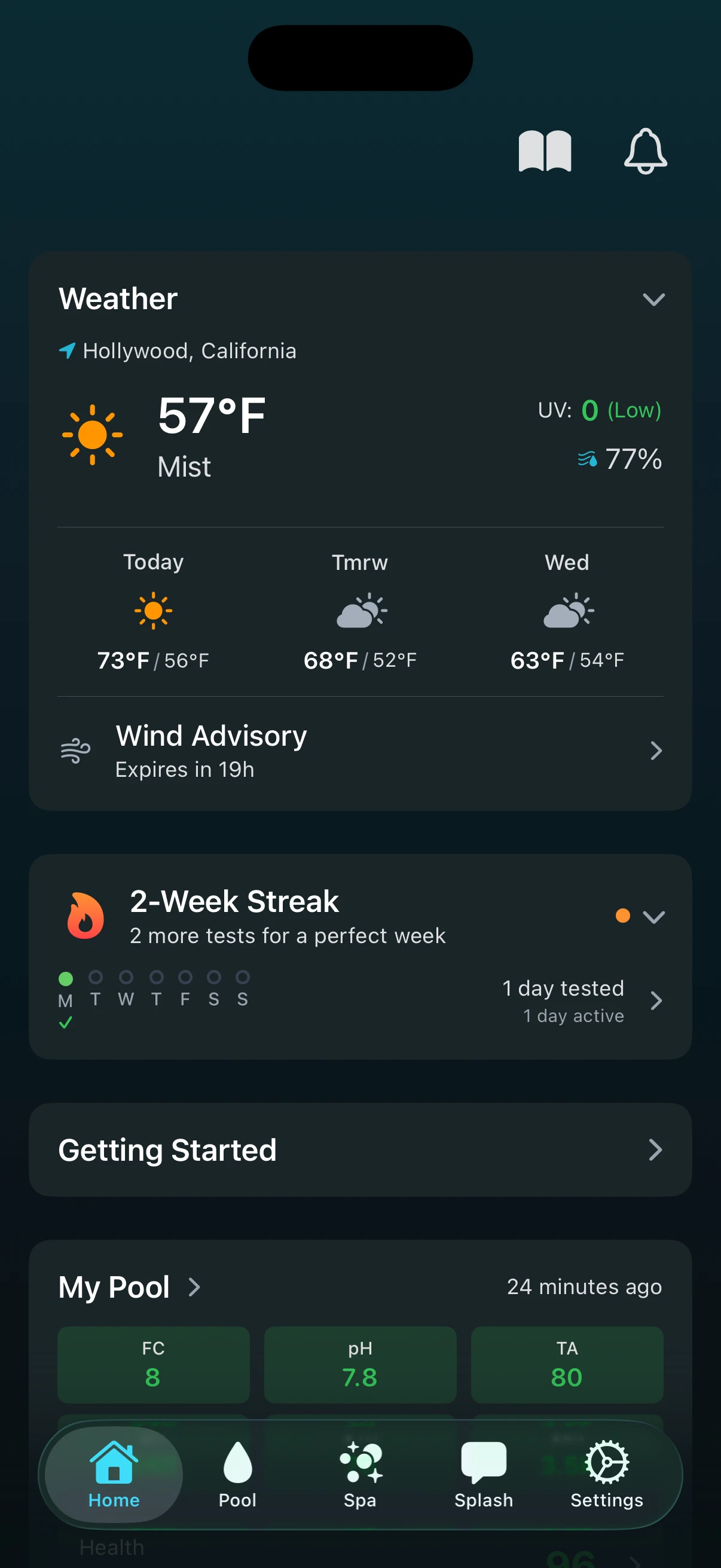
Real-time weather integration PoolFu pulls real-time conditions, 7-day history, and 3-day forecast automatically. PoolMath lets users manually log weather conditions alongside test entries, but there's no automatic data, no correlation with chemistry changes, and no proactive alerts.
Freeze alerts with equipment protection Equipment-specific protection guidance when temperatures drop. Days-until-freeze countdown with run-pump-continuously reminders.
Rain correlation with chemistry Salt dropped 300 ppm? PoolFu sees the 3 inches of rain this week and explains the dilution. PoolMath has no weather-chemistry correlation.
Hemisphere-aware seasons December is summer in Australia. Maintenance guidance adapts automatically.
Winterization intelligence Guided winterization with equipment-specific steps. Chemistry recommendations pause while winterized. Data freshness adjusts for covered periods.
Government weather alert integration Official NWS warnings for winter storms, blizzards, ice, tornadoes, and heat advisories. Not just temperature thresholds.

Safety

Feature
PoolFu
PoolMath
Dangerous reading warnings Non-dismissible alerts for zero sanitizer, unsafe pH, and high CYA. PoolMath shows color-coded ranges but doesn't warn about dangerous conditions or prevent swimming.
Chemical handling safety Context-aware instructions for acid handling, pre-dilution, mixing dangers, and PPE reminders. PoolMath has no chemical safety guidance.
Out-of-range warnings Both apps indicate when readings fall outside recommended ranges. PoolMath's warnings are color-coded against fixed TFP ranges.

Global & Accessibility

Feature
PoolFu
PoolMath
Multilingual support PoolFu: 9 languages (English, Spanish, French, German, Italian, Portuguese, Chinese Simplified & Traditional, Japanese). PoolMath: English only.

Community

Feature
PoolFu
PoolMath
TFP community forums Massive knowledge base of pool care discussions with experienced volunteers. This is PoolMath's real superpower. No app can replicate decades of community knowledge and real-time troubleshooting from people who've seen every problem.

Field Reliability

Feature
PoolFu
PoolMath
Offline mode PoolFu saves tests and logs locally, syncing transparently when connectivity returns. PoolMath's premium features require cloud sync.
Cross-device sync Both apps sync across devices. PoolMath requires a premium subscription for cloud sync.
Android and web support PoolMath is available on Android, Amazon Appstore, and has a browser-based version in beta. PoolFu is iOS only.
CSV data export PoolMath supports CSV import/export with a premium subscription. PoolFu data export is coming soon.
Pricing

What it actually costs.

PoolMath is $7.99/year. PoolFu Homeowner is $53.99/year. The $46 difference is less than one mis-dosed chemical treatment.

PoolMath Premium
$7.99/year
Chemistry calculators (pH, FC, CH, salt, TA, borates, CSI), SWG model database with chlorine output, effects-of-adding simulation, unlimited test log history, maintenance reminders, cloud sync, multi-device, CSV import/export. TFP community forum access is free regardless of subscription.
PoolMath Free
$0
Single log entry only. Calculators still work but history is limited to one entry. Multiple user reviews describe this as frustratingly restrictive.

PoolMath's price is lower. PoolFu's value is higher. A single chemical overdose from missing context costs more than the annual difference.

Real Feedback

What PoolMath users actually say.

Incredibly misleading to call your app free when it requires a subscription to use it to log more than one entry.

Google Play Review · September 2025

The only thing that keeps me from rating this 5 stars is the inability to configure the ideal ranges to align with my pool equipment's recommendations. For example, the recommended CA is too high and exceeds the recommended level for my heater, and I'd rather not see a notice that my CA levels are below the recommended level which is right at what the manufacturer recommends.

Google Play Review · August 2025

I read a review saying it only lets you log one entry. I didn't realize they literally meant you can only log one singular time. That's pretty ridiculous. Love the forum, but this app is not worth a $8 yearly subscription in my opinion.

Google Play Review · October 2024

I prefer to use MPS shock weekly, rather than cranking up my FC concentration to a level that would render my spa unusable for days. With PoolMath, though, I'm forced to enter the addition of MPS as something else (like algaecide), not enter it at all, or just put in a free form note.

App Store Review · 2024
Our Honest Take

We're actually fans of PoolMath.

PoolMath and the TroubleFreePool community have done more to educate pool owners about proper chemistry than anyone else in the industry. The FC/CYA methodology is sound. The forums are an incredible resource staffed by knowledgeable volunteers who've seen every problem. For $7.99 a year, PoolMath does exactly what it promises: calculate what to add. We wouldn't be here without the foundation TFP built.

So what's the difference?

PoolMath is a calculator with a solid SWG database and good fundamentals. You enter your numbers, it tells you how much of what to add. It tracks your surface type and SWG model for chlorine output, and it lets you simulate the effect of adding chemicals before you commit. But it calculates each parameter on its own against fixed TFP ranges that can't be adjusted, even when your equipment manufacturer recommends something different. It won't notice that the pH drift you've been correcting for three weeks has a pattern. It doesn't adjust chlorine targets for your actual water temperature or pH. It doesn't tell your SWG to work harder before recommending you add bleach. And it doesn't explain why your numbers look the way they do.

PoolFu starts where the calculator stops. Same sound FC/CYA foundation, but with equipment-first dosing logic across 616 SWG models, surface-aware calcium that protects your finish, pattern detection that catches problems before they become visible, weather intelligence that correlates rain with chemistry changes, and Splash, an AI assistant that explains the why in plain English. For the pool owner who wants to understand their water, not just calculate dosing, the $32 annual difference costs less than one bag of shock.

One thing PoolMath has that we don't: Android support and a browser-based version in beta. If you're not on iOS, PoolMath is currently your best option for sound chemistry calculations.

PoolMath is a good calculator. PoolFu is a chemist in your pocket.

PoolMath is a good app backed by a great community. It has SWG support, the TFP methodology, effects-of-adding simulation, and the price reflects what you get: a capable calculator. PoolFu takes that same FC/CYA foundation and adds depth. Equipment-first dosing logic, surface-aware calcium, pattern detection, real-time weather intelligence, chemical safety warnings, and an AI assistant that explains the why in plain English. PoolMath gives you numbers. PoolFu gives you a chemist who knows your pool. The caveat: if you're on Android, PoolMath is the way to go until PoolFu expands beyond iOS.

Other comparisons

Ready to switch?

14-day free trial. No credit card required. Cancel anytime.
See Pricing